Definition
“Ferro cement is a type of thin wall reinforced concrete, commonly constructed of hydraulic cement mortar, reinforced with closely spaced layers of continuous and relatively small size wire
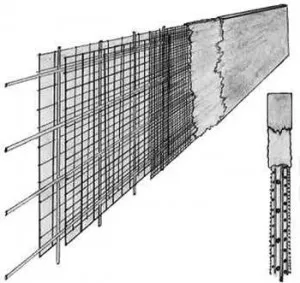
mesh. The mesh may be made of metallic or other suitable materials”
-ACI Committee 549, 1980
· Cement mortar is reinforced with layers of continuous and small diameter wire meshes
· Mortar provides the mass and wire mesh imparts tensile strength and ductility
· Italian engineer Pier Liugie Nervi is credited with inventing ferro cement in the 1940’s
Materials used in Ferro cement
· Cement mortar mix
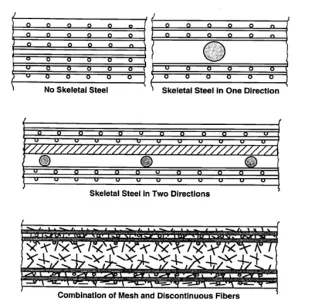
· Skeleton steel
· Steel mesh reinforcement or Fibre-reinforced polymeric meshes
Cement mortar mix
· OPC and fine aggregate matrix is used
· The matrix constitutes 95% of the composite and governs its behavior
· FA (sand), occupies 60 to 75% of the volume of the mortar
· Plasticizers and other admixtures are used
Mix Proportions
· Sand: cement ratio (by mass) 1.5 to 2.5
· Water: cement ratio (by mass) 0.35 to 0.60
Skeleton steel
· Forms the skeleton of the structure
· 3 to 8 mm steel rods are used
· Used in the form of tied reinforcement or welded wire fabric
· Used to impart structural strength in case of boats, barges etc
· Reinforcement should be free from dust, rust and other impurities
Steel mesh reinforcement
· Consists of galvanized steel wires of diameter 0.5 to 1.5 mm, spaced at 6 to 20mm centre to centre
· Available as woven/interlocking mesh and welded mesh
· Welded wire mesh has hexagonal or rectangular openings
· Expanded-metal lath is also used
· Made from carbon, glass etc.
Advantages:
I.High corrosion resistance
II.High strength
III.Lower unit weight
IV.Easy to handle
V.Good fatigue behavior
Disadvantages:
I.High cost
II.Low shear strength
III.Low ductility
IV.Susceptibility to stress rupture failure
Advantages of Ferro cement
· High ductility
· High resistance to cracking width
· Ability to undergo large deflection
· Improved impact resistance and toughness
· Good fire resistance
· Good impermeability
· Low strength to weight ratio
· Low maintenance costs
Applications of Ferro cement
· Marine applications
· Water supply and sanitation
· Agricultural
· Residential buildings
· Rural energy
· Other structures
· Boats, fishing vessels, barges, cargo tugs, catamarans, yachts and flotation buoys
· Key criteria for marine applications: light weight, impact resistance, thickness and water tightness