Sensecentral ETF Investing Guide
Why Authorized Participants Matter in ETFs
Beginner-friendly Sensecentral guide to why authorized participants matter in etfs with checklist, tables, ETF pricing notes, FAQs, internal links, resources, and references.
ETF structure matters because the product looks simple on the trading screen but relies on a professional ecosystem behind it. When that ecosystem works well, market prices usually stay close to the value of the underlying basket.
This Sensecentral guide explains Why Authorized Participants Matter in ETFs in a beginner-friendly way with practical examples, tables, checklists, and decision rules. The focus is on Indian investors who use a demat and trading account to buy exchange traded funds, but the principles also apply to most global ETF markets.
Before investing, remember that ETFs are market-linked products. They can rise and fall in value, and they can trade at a small premium or discount to fair value. This article is for education only and should not be treated as personal financial advice.
Key Takeaways
Core idea
Why Authorized Participants Matter in ETFs is mainly about learning how to understand the role of institutions that help ETF prices stay close to the underlying basket value.
Beginner rule
Do not buy an ETF only because it is popular, cheap, or shown at the top of a broker list. Always compare the index, liquidity, spread, tracking, and cost.
Execution rule
Use limit orders, especially in less liquid ETFs. The price you pay matters as much as the ETF you choose.
Review habit
Check ETF factsheets and portfolio quality every quarter. You do not need to trade often, but you should stay informed.
Why Authorized Participants Matter in ETFs: Basics Explained
At the simplest level, an ETF is a fund that trades on the stock exchange like a share while usually tracking an index, commodity, bond basket, sector, or strategy. That means the investor sees a live market price during trading hours, but the fund also has an underlying value based on what it owns.
Behind every ETF trade is a structure that connects the asset management company, stock exchange, authorized participants, market makers, custodians, index providers, and investors. Retail investors usually trade small quantities on the exchange, while authorized participants can create or redeem large blocks called creation units.
This creation and redemption mechanism is important because it helps keep ETF prices close to the underlying basket value. When an ETF becomes expensive versus its underlying assets, professional participants may create units and sell them. When it becomes too cheap, they may redeem units or buy the ETF and exchange it for the underlying basket.
Step-by-Step Checklist
- Define the purpose: Decide whether the ETF is for long-term wealth building, gold allocation, sector exposure, short-term parking, or learning. A product cannot be suitable until the goal is clear.
- Understand the benchmark: Read the exact index name and methodology. A Nifty 50 ETF, Bank ETF, Gold ETF, international ETF, and smart beta ETF can behave very differently.
- Check cost and tracking: Look at expense ratio, tracking error, and tracking difference. Cost matters, but poor tracking can hurt returns even when the expense ratio looks attractive.
- Check liquidity: Review average traded value, order-book depth, and bid-ask spread. Liquidity affects how close your executed price is to fair value.
- Check price fairness: Compare market price with NAV and iNAV where available. Avoid rushing into an order when the ETF trades far away from fair value.
- Use a limit order: Enter the maximum price you are willing to pay or the minimum price you are willing to accept while selling. This is especially useful in ETFs with lower volume.
- Record your decision: Save a simple note with date, ETF name, index, price, NAV/iNAV, spread, and reason. This builds discipline and helps future review.
Helpful Table for Why Authorized Participants Matter in ETFs
| ETF participant | Role | What beginners should know |
|---|---|---|
| AMC / ETF issuer | Runs the ETF scheme and publishes disclosures. | You depend on transparent management and reporting. |
| Exchange | Provides trading venue and market data. | ETF units trade like shares during market hours. |
| Authorized participant | Creates or redeems large ETF blocks with the AMC. | This arbitrage channel helps reduce large premiums/discounts. |
| Market maker | Provides buy and sell quotes in the market. | Better market-making usually means tighter spreads. |
| Custodian / assets | Safeguards the underlying securities or assets. | A clear custody structure improves trust. |
This table is not a replacement for the scheme information document or professional advice. It is a beginner-friendly screening tool that helps you ask better questions before investing.
Simple Example
Imagine strong demand pushes an ETF’s market price above the value of its underlying basket. An authorized participant can deliver the underlying securities to the fund house and receive new ETF units. These units can then be sold in the market. This additional supply can help reduce the premium.
When the ETF trades below fair value, the reverse process can happen. Professional arbitrage is one reason ETFs often stay near their underlying value, although gaps can still occur in stressed or illiquid markets.
Common Mistakes to Avoid
Buying only because the ETF is cheap
A low market price per unit does not mean the ETF is undervalued. Focus on what it tracks and whether the price is fair relative to NAV/iNAV.
Ignoring the bid-ask spread
A wide spread is a real cost. It can matter more than a tiny difference in expense ratio.
Using market orders in thin ETFs
Market orders can execute at unexpected prices. Limit orders give you better control.
Comparing wrong benchmarks
Do not compare a sector ETF with a broad-market ETF or a price return benchmark with a total return benchmark.
Overlapping too many ETFs
Owning many ETFs does not automatically mean diversification. Several ETFs may hold the same top stocks.
Chasing recent returns
A hot ETF theme can cool quickly. Understand the index rules and concentration before investing.
Not reading the factsheet
The factsheet reveals holdings, AUM, expenses, tracking, sector allocation, and risk notes.
Useful Resources for ETF Learners and Creators
Useful Resource: Explore Our Powerful Digital Products
Browse these high-value bundles for website creators, developers, designers, startups, content creators, and digital product sellers. If you are building blogs, comparison websites, digital products, landing pages, templates, or creator assets, InfiniteMarket can help you save time with ready-to-use digital resources.
Free Productivity Tools Hub: Zee Sharp
Zee Sharp is a growing suite of free online tools for productivity, development, and creativity. No sign-up. No watermarks. Just tools. It is useful for creators, students, developers, bloggers, and small business owners who need quick browser-based utilities.
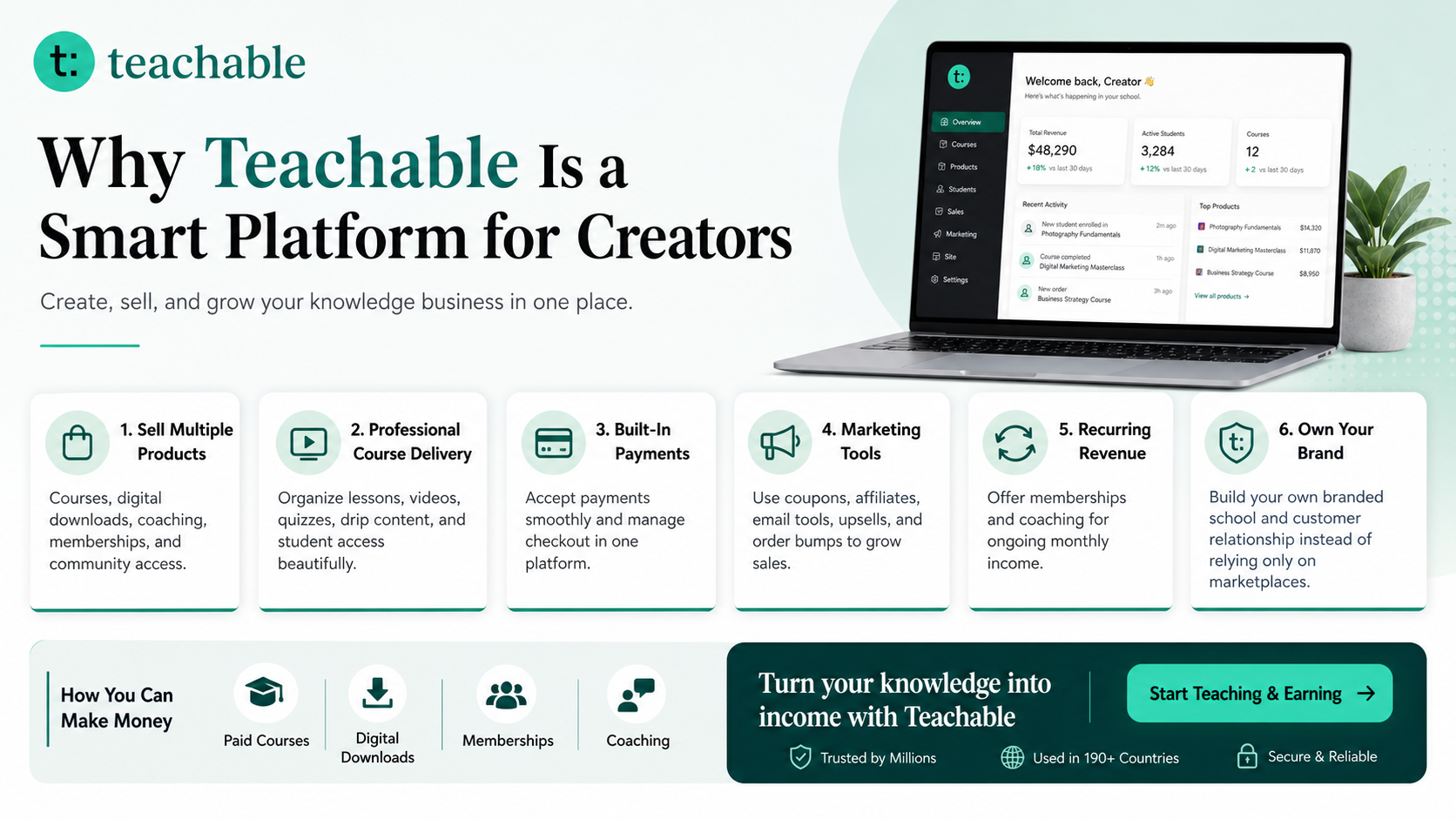
Creator Resource: Build and Sell Your Knowledge With Teachable
Teachable is an online platform that lets creators build, market, and sell courses, digital downloads, coaching, and memberships. It helps educators and entrepreneurs turn their knowledge into a branded digital business without needing complex coding.
How to Make Money with Teachable: A Complete Creator’s Guide
FAQs
Is why authorized participants matter in etfs important for beginners?
Yes. Why Authorized Participants Matter in ETFs helps beginners avoid emotional ETF decisions and understand the practical details that affect real returns.
Should I buy ETFs with market orders?
Beginners should generally prefer limit orders, especially when ETF liquidity is low or the bid-ask spread is wide. A market order may execute at an unfavorable price.
Is low expense ratio the most important factor?
Expense ratio matters, but it is not the only factor. Liquidity, tracking error, tracking difference, AUM, bid-ask spread, index quality, and portfolio concentration also matter.
How often should I review an ETF?
A quarterly review is enough for most long-term investors. Check factsheet, AUM, tracking data, expense ratio, holdings, sector allocation, and whether the ETF still fits your goal.
Can ETFs lose money?
Yes. ETFs are market-linked. If the underlying index, commodity, bond basket, sector, or global market falls, the ETF price can fall too.
Further Reading on Sensecentral
References
- SEBI Investor Education – Understanding Exchange Traded Fund
- SEBI Investor Education – Net Asset Value
- AMFI – Latest NAV
- AMFI – Tracking Error and Tracking Difference
- NSE India – Exchange Traded Funds Market Data
- NSE Indices – Index Information
- Zerodha Support – What is iNAV
- BSE India iNAVs information via Deutsche Börse Market Data