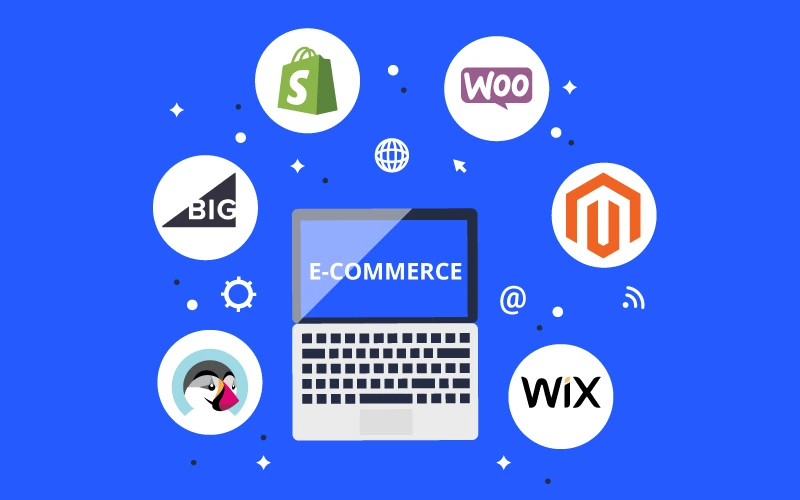
Choosing an ecommerce platform in 2026 isn’t just about “who has a nicer theme.” It’s a business decision that affects your margins, speed, SEO, marketing, operations, and how fast you can scale. In this guide, I’ll compare the best ecommerce platforms of 2026 across real-world criteria—ease of use, customization, total cost, growth features, and long-term flexibility—then rate each option so you can pick confidently.
- Table of Contents
- How we rated and scored platforms (2026 criteria)
- Comparison table (at-a-glance)
- The 10 best ecommerce platforms in 2026 (ranked)
- 1) Shopify — Best overall for most sellers
- 2) WooCommerce — Best for WordPress sites and maximum control
- 3) BigCommerce — Best for built-in features and growing catalogs
- 4) Wix — Best for beginners who want speed + design freedom
- 5) Squarespace — Best for premium design and creator-led commerce
- 6) Adobe Commerce (Magento) — Best for enterprise complexity and B2B depth
- 7) Salesforce Commerce Cloud — Best for large enterprises in the Salesforce ecosystem
- 8) Shopware — Best for composable commerce and modern architecture
- 9) PrestaShop — Best open-source option for cost-conscious builds
- 10) Square Online — Best for POS-first businesses and local shops
- How to choose the right platform (simple decision framework)
- 1) Start with your “store complexity”
- 2) Decide how much control you truly need
- 3) Estimate total cost (not just the monthly plan)
- 4) Check your must-have list before you commit
- Key Takeaways
- FAQs
- Which ecommerce platform is best in 2026 for beginners?
- What’s the best ecommerce platform for SEO?
- Which platform is best for scaling to high revenue?
- Is WooCommerce really “free”?
- Should I choose SaaS or open-source in 2026?
- What’s the most important thing to check before migrating?
- References & further reading
Quick note: Pricing and features change often. I include “pricing snapshots” to help you shortlist, but always confirm details on each platform’s official pricing page before you commit.
Table of Contents
- How we rated and scored platforms (2026 criteria)
- Comparison table (at-a-glance)
- The 10 best ecommerce platforms in 2026 (ranked)
- How to choose the right platform for your store
- FAQs
- References & further reading
How we rated and scored platforms (2026 criteria)
To keep this review useful (and not just a list of logos), each platform is rated on a 10-point scale using the same scorecard:
- Ease of setup (20%) — How quickly a beginner can launch a professional store.
- Store design & UX (15%) — Themes, editing experience, mobile performance, and checkout quality.
- Commerce features (20%) — Products, variants, inventory, shipping/tax, subscriptions, digital goods, B2B basics.
- Marketing & SEO (15%) — SEO controls, blogging/content support, email/automation, promotions, integrations.
- Scalability (15%) — Multi-store, internationalization, high-SKU catalogs, performance, APIs/headless.
- Total cost & flexibility (15%) — Monthly fees + transaction fees + paid apps + developer/hosting needs.
Pro tip: The “best” platform depends on your constraints. If you want the fastest launch with minimal tech overhead, you’ll likely choose an all-in-one SaaS. If you want maximum ownership and customization, open-source platforms can win—but you’ll trade convenience for control.
Comparison table (at-a-glance)
| Platform | Best for | Ease | Scales well | Pricing snapshot | Notes |
|---|---|---|---|---|---|
| Shopify | Most stores (fast growth + stability) | ★★★★★ | ★★★★★ | From low-cost starter plans; main plans typically start around $29/mo (annual) | Strong ecosystem, excellent checkout, great for omnichannel |
| WooCommerce | WordPress + full control | ★★★☆☆ | ★★★★☆ | Plugin is free; you pay hosting, theme, extensions | Flexible, SEO-friendly, but you manage updates/performance |
| BigCommerce | Growing brands needing built-in features | ★★★★☆ | ★★★★★ | Often starts around ~$39/mo (plan-based) | Powerful native features; fewer “must-have” paid apps |
| Wix | Beginners + quick branded stores | ★★★★★ | ★★★☆☆ | Business ecommerce plans vary by region | Very fast to build, great templates, improving commerce stack |
| Squarespace | Design-first stores + creators | ★★★★☆ | ★★★☆☆ | Plan-based; ecommerce features increase at higher tiers | Beautiful design system; great for smaller catalogs |
| Adobe Commerce (Magento) | Enterprise + complex catalogs/B2B | ★★☆☆☆ | ★★★★★ | Custom pricing / enterprise packages | Deep flexibility, but needs strong dev/implementation |
| Salesforce Commerce Cloud | Large enterprise (omnichannel + CRM) | ★★☆☆☆ | ★★★★★ | Custom pricing / contact sales | Powerful enterprise stack; best with Salesforce ecosystem |
| Shopware | Mid-market/enterprise in EU + composable builds | ★★★☆☆ | ★★★★★ | Plan-based (Rise/Evolve/Beyond) | Modern architecture; strong for complex commerce needs |
| PrestaShop | Open-source stores (EU/LatAm popular) | ★★★☆☆ | ★★★★☆ | Open-source download is free; hosting/modules cost extra | Solid flexibility; best with a capable developer/agency |
| Square Online | Local shops + POS-first selling | ★★★★★ | ★★★☆☆ | Free plan available; paid plans unlock more tools | Best for in-person + online inventory sync |
The 10 best ecommerce platforms in 2026 (ranked)
Below are the top platforms, ranked with real-world pros/cons and “who should use this” guidance.
1) Shopify — Best overall for most sellers
Overall rating: 9.6/10
If you want the highest chance of launching quickly and scaling smoothly, Shopify remains the safest “default” choice in 2026. It’s stable, beginner-friendly, and powerful enough for large brands—without forcing you to become a server admin.
Best for: DTC brands, fast-moving startups, creators launching products, and teams who want speed + reliability.
Standout strengths:
- Best-in-class checkout and conversion-focused ecosystem.
- Huge app/theme marketplace and partner network.
- Omnichannel selling (social, marketplaces, in-person POS) is mature.
Watch-outs:
- Total cost can rise with paid apps and advanced features.
- If you want “anything is possible” customization, you may need development help.
Helpful links:
Shopify ·
Shopify pricing ·
Shopify plan features
2) WooCommerce — Best for WordPress sites and maximum control
Overall rating: 9.2/10
WooCommerce is ideal if your content strategy is central (blogs, guides, affiliate content, SEO) and you want your store to live inside WordPress. The core plugin is free, open-source, and incredibly flexible—especially when paired with solid hosting and a clean theme.
Best for: WordPress publishers, SEO-driven stores, agencies, and owners who want control over code + data.
Standout strengths:
- Full ownership: hosting choice, performance tuning, and deep customization.
- Excellent for content + commerce together (WordPress advantage).
- Large extension ecosystem (subscriptions, bookings, memberships, etc.).
Watch-outs:
- You manage updates, security, backups, caching, performance.
- Costs vary widely (hosting, premium themes, paid extensions, dev).
Helpful links:
WooCommerce plugin ·
WooCommerce pricing guide ·
WooCommerce official site
3) BigCommerce — Best for built-in features and growing catalogs
Overall rating: 9.0/10
BigCommerce is a strong “serious business” platform that often reduces your dependency on paid apps by shipping more functionality natively. If you’re scaling a catalog, doing B2B-lite, or want a platform that’s comfortable with more complexity, BigCommerce is worth a close look.
Best for: SMB to mid-market brands, larger catalogs, and teams who want robust features without endless add-ons.
Standout strengths:
- Strong native features (catalog tools, promotions, segmentation, etc.).
- Good foundation for headless/composable builds.
- Scales well for multi-channel and higher order volume.
Watch-outs:
- Some plans have thresholds/upgrade triggers as you grow (review plan details carefully).
Helpful links:
BigCommerce ·
BigCommerce pricing
4) Wix — Best for beginners who want speed + design freedom
Overall rating: 8.7/10
Wix is the “launch fast” champion for many small businesses. In 2026, it’s especially attractive if you want a good-looking site quickly, prefer a visual builder, and don’t want to touch hosting or technical maintenance.
Best for: Small stores, local services selling online, brand-first portfolios with a shop, quick MVP launches.
Standout strengths:
- Very fast build process with strong design tools.
- Useful built-in business features (bookings, forms, basic marketing).
- Low technical overhead (hosting and security are handled).
Watch-outs:
- For very large catalogs or complex workflows, you may hit limits earlier than on enterprise-focused platforms.
Helpful links:
Wix ·
Wix plans ·
Wix ecommerce cost guide
5) Squarespace — Best for premium design and creator-led commerce
Overall rating: 8.6/10
Squarespace wins when design quality, brand consistency, and a polished “premium” look matter most. If you’re a creator, studio, consultant, or boutique brand with a manageable catalog, Squarespace can feel effortless—and look expensive (in a good way).
Best for: Creators, photographers, premium boutiques, small catalogs, digital products, portfolio + shop.
Standout strengths:
- Beautiful templates and strong design system.
- Simple site management for non-technical owners.
- Solid ecommerce essentials at higher tiers.
Watch-outs:
- Not the best fit for highly complex catalogs or advanced operations.
Helpful links:
Squarespace ·
Squarespace pricing ·
Choosing a Squarespace plan
6) Adobe Commerce (Magento) — Best for enterprise complexity and B2B depth
Overall rating: 8.5/10
Adobe Commerce is a powerhouse for complex catalogs, advanced B2B features, and enterprise-grade customization. If your business needs deep workflows, custom pricing logic, multi-store complexity, or heavy integrations, Adobe Commerce can be a long-term platform—provided you have the budget and the implementation team.
Best for: Enterprise retail, complex B2B commerce, multi-brand/multi-region stores, high-SKU catalogs.
Standout strengths:
- Extremely flexible for custom business rules and integrations.
- Designed for scale and complex catalogs.
- Strong when paired with Adobe’s broader experience stack.
Watch-outs:
- Implementation is not “plug-and-play.” Budget for developers and ongoing maintenance.
Helpful links:
Adobe Commerce overview ·
Adobe Commerce pricing
7) Salesforce Commerce Cloud — Best for large enterprises in the Salesforce ecosystem
Overall rating: 8.4/10
If your organization already runs on Salesforce (CRM, Service, Marketing, Data Cloud) and you want ecommerce tightly connected to customer data and enterprise processes, Salesforce Commerce Cloud is a top-tier option. It’s built for large teams, complex operations, and global scale.
Best for: Enterprises that want commerce + CRM + service + marketing in one connected ecosystem.
Standout strengths:
- Enterprise-grade capabilities and support options.
- Deep integration potential with Salesforce products.
- Strong for omnichannel programs and sophisticated customer journeys.
Watch-outs:
- Not a small-business tool—expect a longer sales cycle and implementation effort.
Helpful links:
Salesforce commerce pricing ·
Salesforce commerce editions
8) Shopware — Best for composable commerce and modern architecture
Overall rating: 8.3/10
Shopware is a strong choice for businesses that want modern ecommerce architecture and room to build “exactly what you need” (especially in Europe). If you’re aiming for a composable stack—where ecommerce is one part of a larger system—Shopware deserves attention.
Best for: Mid-market brands, EU-focused commerce, composable/headless builds, B2B and complex use cases.
Standout strengths:
- Modern platform approach with strong flexibility for developers.
- Plan-based offerings that can fit growing businesses.
- Good option when you want control but not full DIY from scratch.
Watch-outs:
- Best results often require a developer/agency partner.
Helpful links:
Shopware ·
Shopware pricing ·
Shopware roadmap
9) PrestaShop — Best open-source option for cost-conscious builds
Overall rating: 8.2/10
PrestaShop is an established open-source ecommerce platform with a long history and a large community (especially strong in Europe and Latin America). It’s appealing if you want open-source flexibility without the cost profile of some enterprise suites.
Best for: Budget-conscious businesses with access to technical help, EU/LatAm merchants, custom stores on a controlled budget.
Standout strengths:
- Open-source: you can download and run it on your own hosting.
- Flexible with themes and modules to extend functionality.
- Strong community footprint for many common store needs.
Watch-outs:
- Like most open-source options, you’ll need to manage hosting, updates, and performance.
Helpful links:
PrestaShop ·
PrestaShop open-source ·
Download PrestaShop (Classic)
10) Square Online — Best for POS-first businesses and local shops
Overall rating: 8.1/10
Square Online is a practical pick for brick-and-mortar businesses that want to sell online without building a complex ecommerce stack. The big advantage: inventory, orders, and payments can stay connected to Square’s POS ecosystem.
Best for: Local retailers, cafés, salons, service businesses, and POS-first operators going omnichannel.
Standout strengths:
- Very easy setup and a free starting option.
- Great for syncing in-person and online operations.
- Strong “business toolkit” feel rather than “just a website.”
Watch-outs:
- Not ideal for very complex catalogs or enterprise workflows.
Helpful links:
Square Online ·
Square Online plans ·
Square pricing overview
How to choose the right platform (simple decision framework)
1) Start with your “store complexity”
- Simple store (under ~50 products, basic shipping, minimal automation): Wix, Squarespace, Square Online, Shopify.
- Growing store (100–5,000 products, promotions, segments, multi-channel): Shopify, BigCommerce, WooCommerce (with good hosting).
- Complex store (B2B pricing, multi-warehouse, multi-brand, heavy integrations): BigCommerce, Shopware, Adobe Commerce, Salesforce Commerce Cloud.
2) Decide how much control you truly need
If you want to avoid tech headaches, pick an all-in-one platform (Shopify, BigCommerce, Wix, Squarespace, Square Online). If you need deep customization and want to own the stack, consider WooCommerce, PrestaShop, Shopware, or Adobe Commerce.
3) Estimate total cost (not just the monthly plan)
- SaaS platforms: plan cost + payment processing + paid apps + premium theme.
- Open-source platforms: hosting + developer help + paid modules/extensions + security/performance tools.
- Enterprise: licensing + implementation + integrations + ongoing optimization.
4) Check your must-have list before you commit
Before migrating or launching, confirm support for the essentials you’ll use in the next 12 months:
- Subscriptions or memberships
- Digital products
- B2B pricing/quotes
- Multi-currency and international tax/shipping
- POS syncing
- Headless/API needs
- SEO controls (titles, meta, canonical URLs, redirects)
Key Takeaways
- Shopify is the best all-around choice in 2026 for most sellers who want speed + scale.
- WooCommerce is unbeatable when content + SEO + ownership matter most (but you manage the stack).
- BigCommerce shines for growing brands that want more native features and strong scalability.
- Wix and Squarespace are best for fast, beautiful stores with simpler operations.
- Adobe Commerce and Salesforce Commerce Cloud are best for enterprises with complex needs and budgets.
- Shopware and PrestaShop are strong open-source/plan-based options when you want flexibility with a capable technical partner.
- Square Online is ideal for POS-first local businesses selling online fast.
FAQs
Which ecommerce platform is best in 2026 for beginners?
If you want the simplest path to launch, start with Shopify or Wix. If you’re POS-first (local store), Square Online is an easy start.
What’s the best ecommerce platform for SEO?
If you’re building a content-driven store (blogs, guides, affiliate content), WooCommerce + WordPress is typically the most flexible. Shopify and BigCommerce also support strong SEO workflows, but WordPress gives you the deepest content tooling.
Which platform is best for scaling to high revenue?
Shopify and BigCommerce are excellent for scaling. For enterprise complexity, Adobe Commerce or Salesforce Commerce Cloud can be better—if you have the budget and implementation support.
Is WooCommerce really “free”?
The core plugin is free, but running a serious store isn’t. You’ll pay for hosting, a theme, paid extensions (sometimes), security/performance tooling, and possibly developer help.
Should I choose SaaS or open-source in 2026?
Choose SaaS if you value speed, lower maintenance, and predictable setup. Choose open-source if you want ownership, deep customization, and you’re comfortable managing or hiring for technical work.
What’s the most important thing to check before migrating?
Confirm: URL structure and redirects, checkout flow, payment gateways, taxes/shipping logic, product data (variants/SKUs), and your must-have apps/integrations. Migration problems usually happen in these areas—not in “how pretty the theme looks.”
References & further reading
- Shopify: Best ecommerce platforms (updated)
- Shopify pricing
- WooCommerce plugin (WordPress.org)
- WooCommerce pricing overview
- BigCommerce pricing
- Wix plans
- Squarespace pricing
- Adobe Commerce pricing
- Salesforce Commerce pricing
- Shopware pricing
- PrestaShop open-source
- Square Online plans
Disclosure: This post may contain affiliate links. If you purchase through a link, I may earn a commission at no extra cost to you. I only recommend tools I believe are genuinely useful.