
Ester Enolates

Rajil TL
1 Min Read
Disclosure: This website may contain affiliate links, which means I may earn a commission if you click on the link and make a purchase. I only recommend products or services that I personally use and believe will add value to my readers. Your support is appreciated!

we introduced the enolates of aldehydes and ketones (review) and looked at their reactions as C nucleophiles (review).  These enolates were formed by treating the aldehyde or ketone with a suitable base :
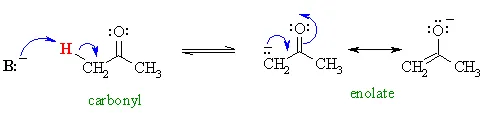
Now we will investigate another group of carbonyl containing compounds, the esters, which behave in a very similar fashion…..
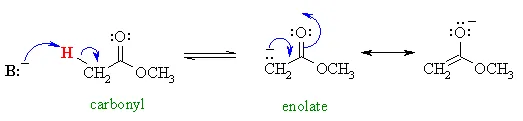
When preparing ester enolates, the base is normally chosen to match the alcohol portion of the ester
So if you have:
a methyl ester, RCOOCH3 you use methoxide, –OCH3, or,
an ethyl ester, RCOOCH2CH3 you use ethoxide, OCH2CH3

This avoids problems caused by transesterification (conversion of one ester into another)……

or hydrolysis……

Note that in both cases the problem arises because the base reacts as a “nucleophile

Share This Article

Rajil TL is a SenseCentral contributor focused on tech, apps, tools, and product-building insights. He writes practical content for creators, founders, and learners—covering workflows, software strategies, and real-world implementation tips. His style is direct, structured, and action-oriented, often turning complex ideas into step-by-step guidance. He’s passionate about building useful digital products and sharing what works.

Leave a review