How to Choose Between Popular and Less Popular Funds
Important note: This article is for educational purposes only. Mutual fund investments are subject to market risks. Read all scheme-related documents carefully and consider speaking to a qualified financial adviser for personal advice.
This guide explains How to Choose Between Popular and Less Popular Funds in a practical, beginner-friendly way. The aim is not to predict which fund will be number one next year. The aim is to help you read a mutual fund with calmer judgment, understand what the fund actually owns or promises to do, and decide whether it deserves a place in your portfolio. For Sensecentral readers, the best fund is not the most advertised fund, the newest fund, or the fund with the loudest social media praise. It is the fund whose role, risk, cost, and behavior you can explain in simple language.
The central idea in this post is popular vs less popular funds. In simple terms, you should compare suitability, not popularity. This sounds basic, but it solves a major beginner problem: many investors buy mutual funds using return charts alone. A return chart shows what happened in the past; portfolio, category, cost, and strategy checks show why it may have happened and whether the same approach still fits your goal.
Before you invest, remember that mutual fund categories in India are shaped by regulatory definitions, scheme documents, and AMC disclosures. AMFI explains that mutual funds pool money from investors and invest it according to the scheme objective, while SEBI’s categorization framework helps investors compare schemes more fairly. This means your first job is to identify the correct comparison group. A large-cap index fund, a flexi-cap active fund, an aggressive hybrid fund, and an overnight fund should never be judged with the same expectations.
A simple way to think about any mutual fund is to ask four questions. What is the fund allowed to do? What is it actually doing now? What can go wrong if the market turns against its style? What job should it perform in my personal portfolio? When the answer to these questions is unclear, the fund may still be good, but it is not yet good for you. Beginner investing improves when you slow down and make the fund earn a place in your portfolio.
Quick Answer
The AMC matters because it controls research systems, risk management, compliance culture, product design, and investor communication. But a strong brand cannot make every scheme suitable for every goal.
For this specific topic, focus on popular vs less popular funds: compare suitability, not popularity. A beginner does not need complex models on day one. You need a clean process that stops you from buying a fund because it is trending, newly launched, famous, or temporarily ranked at the top.
Why This Matters
Beginners often feel safe choosing only the biggest or most advertised fund houses. Size and reputation are useful signals, but fund selection still requires category fit, costs, portfolio quality, and process clarity.
Mutual funds are easier than direct stock picking in some ways, but they still require judgment. A scheme can hold dozens of securities and still behave like a concentrated bet. A fund can have a reputed AMC and still be unsuitable for a short-term goal. A fund can be low-cost and still track the wrong index for your needs. That is why Sensecentral recommends using a layered approach: understand the category, read the portfolio, check costs and execution, and then decide whether the fund has a clear job.
The biggest benefit of this approach is emotional control. When the market falls, investors who know why they own a fund are less likely to panic. When the market rises, they are less likely to add random funds out of excitement. A written investment reason can be surprisingly powerful because it turns a vague purchase into a reviewable decision.
How to Read the Fund Properly
1. Start with the fund objective
Open the scheme page, factsheet, and Scheme Information Document. Read the investment objective slowly. Do not stop at the fund name. The objective tells you what the fund is trying to do, the category tells you where it broadly belongs, and the portfolio tells you how the manager is currently implementing that objective. When these three do not match, you should pause.
2. Compare only with similar funds
Beginners often compare every fund with the highest-returning fund they saw online. That creates confusion. An overnight fund, arbitrage fund, index fund, flexi-cap fund, and small-cap fund are built for different jobs. A fair comparison starts with similar category, similar benchmark, similar risk level, and similar investment horizon.
3. Use the latest portfolio, not old screenshots
Portfolio data changes. If you are reviewing holdings, sector weights, market-cap exposure, or style, use the latest AMC factsheet or portfolio disclosure. Third-party apps are helpful, but official documents should be your base source. If a fund changes its positioning, old screenshots may give you false comfort.
4. Check the core metrics
- AUM and scheme size: check this before making a final decision.
- Investment philosophy: check this before making a final decision.
- Risk management process: check this before making a final decision.
- Communication quality: check this before making a final decision.
- Product overlap: check this before making a final decision.
These checks are simple, but they create a complete picture. They tell you whether the fund’s name, portfolio, cost, and risk are aligned. They also help you compare two funds without getting distracted by one-year performance alone.
Useful Comparison Table
Use this table as a practical mini-scorecard while studying How to Choose Between Popular and Less Popular Funds. You can copy the columns into a spreadsheet and compare two or three funds side by side.
| What to Check | Why It Matters | Beginner Interpretation |
|---|---|---|
| AUM size | Shows scale and investor trust | Very large funds can face deployment challenges in smaller categories |
| Investment philosophy | Shows how decisions are made | Prefer clear, repeatable processes |
| Risk controls | Shows downside discipline | Look for portfolio limits and liquidity awareness |
| Disclosure quality | Shows transparency | Factsheets should be easy to understand |
| Product lineup | Shows focus or clutter | Too many similar schemes can confuse investors |
Green Flags and Red Flags
Green Flags
- The fund objective, category, benchmark, and portfolio behavior are aligned.
- The AMC communicates the strategy clearly in factsheets and scheme documents.
- The fund has a role in your portfolio instead of being a random addition.
- Risk levels are understandable and acceptable for your time horizon.
- Costs, turnover, and tracking behavior are reasonable compared with peers.
Red Flags
- You cannot explain why you are buying the fund in one paragraph.
- The fund duplicates exposure you already hold through other funds.
- You are attracted mainly by a recent ranking, NFO campaign, or famous name.
- The portfolio shows concentration or risk that does not match your goal.
- You are using a long-term equity fund for a short-term money need.
A red flag does not always mean you must reject a fund. It means you should ask deeper questions. For example, a concentrated fund may be intentional, but then you must be comfortable with higher stock-specific risk. A high small-cap allocation may fit a long horizon, but it may be painful if you need the money soon. Good fund analysis is not about finding perfect funds; it is about matching fund behavior with investor reality.
Beginner Checklist
Before investing, answer these questions in writing. A written checklist protects you from noise, marketing pressure, and emotional decisions.
- Study the AMC’s investment philosophy page and scheme documents
- Compare how different funds from the same AMC behave
- Check disclosures, factsheets, and communication clarity
- Look for risk controls beyond marketing language
- Do not buy solely because the AMC is popular
Also add three personal checks: When will I need this money? How much temporary loss can I tolerate without panic? What will make me sell the fund? These questions matter because the same mutual fund can be suitable for one investor and unsuitable for another. Suitability depends on the goal, horizon, income stability, existing assets, tax situation, and ability to stay invested during bad phases.
How to Use This in Your Portfolio
Do not start by asking, “Is this the best fund?” Start by asking, “What role will this fund play?” A core fund should usually be broad, understandable, and easy to hold. A satellite fund can be more specialized, but it should have a limit. A short-term parking fund should prioritize liquidity and low volatility. A thematic or new fund should solve a specific problem, not simply add excitement.
One useful beginner method is the three-line fund thesis. Line one: the role of the fund. Line two: the reason you chose this fund over alternatives. Line three: the review trigger. For example, your review trigger may be a change in category mandate, persistent tracking difference, manager change, rising concentration, or the fund no longer matching your goal. This small habit makes your portfolio easier to manage.
If you already own several funds, use this post to identify overlap. Many investors think they are diversified because they own eight schemes, but those schemes may all hold the same large-cap stocks or the same sector exposures. Diversification comes from different underlying risks, not just different fund names.
Useful Resources and Further Reading
Affiliate disclosure: Some links in this article may be affiliate or promotional links. Sensecentral may earn a commission when you use those links, at no extra cost to you. The investing education in this article is general information, not personal financial advice.
Further Reading on Sensecentral
- How to Avoid Over-Relying on AMC Brand Name
- How to Understand New Fund Strategy Before Investing
- How to Avoid Investing Just Because a Fund Is Newly Launched
- How to Make Money with Teachable: A Complete Creator’s Guide
- Sensecentral Finance Guides
Useful Creator Resource: Explore Our Powerful Digital Products
Explore Our Powerful Digital Products — browse high-value bundles for website creators, developers, designers, startups, content creators, and digital product sellers. These resources can help you build websites, launch digital downloads, create content faster, and organize your online business assets.
Creator Platform Resource: Teachable
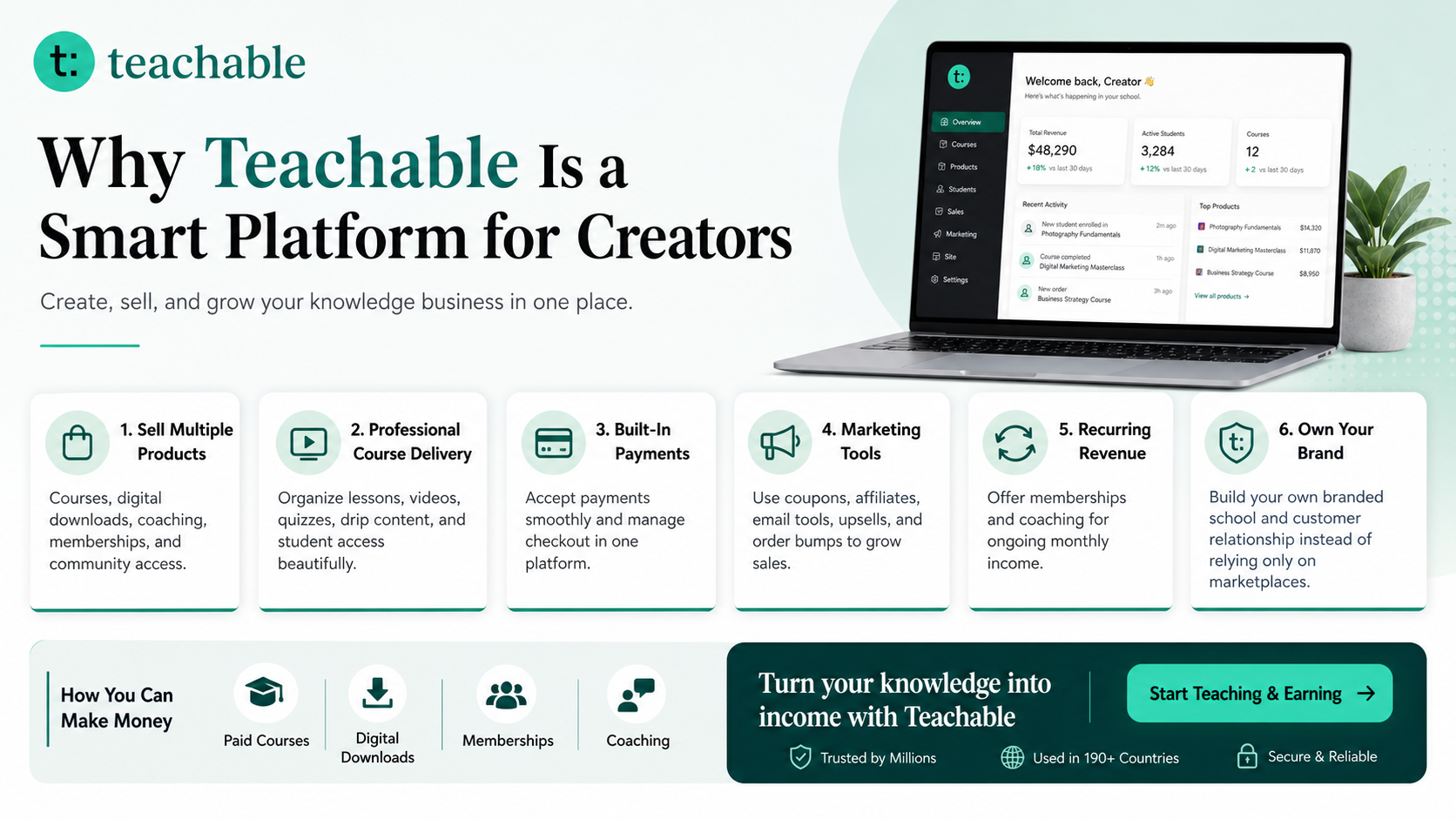
Teachable is an online platform that lets creators build, market, and sell courses, digital downloads, coaching, and memberships. It helps educators and entrepreneurs turn their knowledge into a branded digital business without needing complex coding.
How to Make Money with Teachable: A Complete Creator’s Guide
Video: How to Create a Course with Teachable
Free Productivity Tools Hub: Zee Sharp
Zee Sharp is a growing suite of free online tools for productivity, development, and creativity. No sign-up. No watermarks. Just tools. It is useful when you need quick calculators, formatters, writing helpers, or creator-friendly utilities while researching, publishing, or managing digital work.
Common Mistakes to Avoid
The most common mistake is using returns as a shortcut for research. A high-return fund may have taken higher risk, benefited from a temporary style cycle, or owned concentrated winners that may not repeat. Another mistake is collecting too many funds. When every new idea becomes a new fund, your portfolio turns into a noisy basket that is hard to review.
- Believing big AMC equals best fund
- Ignoring fund-specific risks inside a trusted brand
- Choosing less popular funds only to be different
- Assuming a new AMC is automatically risky
- Using AUM as the only filter
Beginners should also avoid extreme confidence. You do not need to predict markets, interest rates, or the next best category. You need to build a process that helps you invest regularly, understand what you own, and avoid obvious mismatches. A simple, understandable portfolio that you can hold calmly is often better than a complicated portfolio that looks intelligent but creates stress.
Key Takeaways
- Popular vs less popular funds should be studied with the fund’s category, benchmark, and portfolio role.
- Do not compare unrelated categories just because they appear in the same app ranking screen.
- A fund with strong past returns can still be unsuitable if the risk, cost, or overlap is wrong for you.
- Use AMC factsheets, full portfolio disclosures, and official investor-education resources before deciding.
- Write a simple one-line fund thesis and review the fund against that thesis instead of reacting emotionally.
FAQs
Is popular vs less popular funds enough to choose a mutual fund?
No. Popular vs less popular funds is only one part of the decision. Use it with category fit, expense ratio, portfolio risk, benchmark comparison, time horizon, and your own goal.
How often should beginners review a mutual fund?
For long-term equity funds, a quarterly or half-yearly review is usually more useful than daily checking. Debt, arbitrage, overnight, or short-term parking funds may need review when your liquidity need changes.
Should I switch funds immediately if I find a red flag?
Not automatically. First confirm whether the red flag is temporary, category-wide, or specific to the scheme. Switching has tax, exit load, and behavioral costs, so use a written review rule.
Can past returns prove that a fund is good?
Past returns can show history, but they do not prove future suitability. Study the portfolio, process, costs, manager history, benchmark, and whether the fund still follows the reason you bought it.
What is the safest way for a beginner to use this guide?
Start with education. Read the latest factsheet and scheme documents, compare similar funds, write your reason for investing, and consult a qualified financial adviser when the decision affects major goals.
References
Use these external resources to verify mutual fund categories, expense ratio concepts, and investor education basics. Always read the latest scheme documents from the AMC before investing.
Post Tags and Keywords
mutual fundsbeginner investingpersonal financeinvestment educationSensecentralchoosebetweenpopularless